
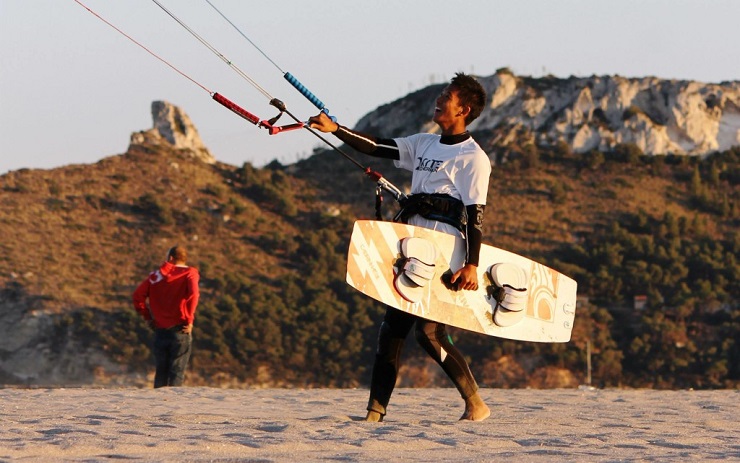
What do designers look for in kite materials? Companies are constantly looking for materials that are lightweight, stable, and long-lasting. This is where there is a fine line. Kites must be lightweight to perform well. However, they are subject to a lot of abuse from the average consumer. In most cases, the lighter the material, the more durable and stable it is. This can lead to potential durability issues and makes kite design more difficult.
For the canopy, there are three parameters that are very important: rigidity and porosity. Resistance to abrasion is also important. The most important thing is the ability of these characteristics to be maintained over time and when it gets wet. The leading edge and ribs need to be rigid and stable. Julien Fillion from Liquid Force said that these parameters are crucial for the canopy’s stability and strength. Raphael Salles of F-One focuses on materials that are light, strong, and long-lasting. Because a kite must fly, it is essential that the material be light and strong. They are very strong and can hit the water with great force. There are also inflated parts that may explode! Kites can only be made from one material currently.
Kiteboarding kites are made primarily from polyester. It takes several steps to create polyester. First, terephthalic and ethylene glycol are combined to form a polymer chip. The polymer chip is then melted and spun into a fiber. This material is used to make the canopy and the leading edge. Some refer to the Dacron leading-edge fabric, which is a trade term for polyester. The polyester fibers are then woven into a cloth, which is then stabilized using a resin. The resin makes the fabric water-resistant, more porous (so air can’t easily pass through), as well as controlling the bias elongation. This is when a cloth is pulled at a 45o angle from the thread orientation.
Teijin Fibers is a Japanese company that supplies kiteboarding companies with polyester cloth. Many kiteboarders mistakenly believe their canopy is made of rip-stop nylon. Teijin’s Shuhei Sonekatsu says polyester is better for kiteboarding than nylon because it has a higher UV resistance and lower stretch than nylon. Polyester is more prone to tearing than nylon. Teijin’s T9600 canopy fabric has been very popular among kiteboard manufacturers. This is because Teijin was able to overcome its weakness by creating a special high-tenacity polyester yarn.
This post was written by Aaron McClearnon, Owner of Elite Watersports. At Elite Watersports, We strive to provide exceptional service and genuine interactions with those interested in Kiteboarding Lessons In Sarasota FL. We hold dear our passion for being out on the water and maintain this as our foundation for all business practices.

